
Exterior Home Contracting in Prince William County, VA
Local Roofing Contractor Expertise
From Leesburg's historic neighborhoods to Ashburn's sprawling estates, roofing contractor services in Loudoun County face unique weather challenges. Our page covers repair, replacement, insurance claims, and what local homeowners need to know before hiring.
Roofing | Loudoun County requires contractors who understand Virginia building codes, HOA approval timelines, and the spring-to-summer storm season that peaks in July and August.
How We Work
What's Involved
Most roofing projects follow a clear sequence: initial inspection, material selection, prep and removal, installation, and final inspection. Each step ensures your roof meets Loudoun County code and handles seasonal weather.
Inspection & Assessment
Walk the roof, document damage, check flashing and ventilation, and identify storm or age-related wear.
Material Selection & Permitting
Choose Class A fire-rated materials, submit plans to Loudoun County, and obtain building permit approval.
Tear-Off & Prep
Remove old roofing, inspect sheathing, repair deck if needed, and install underlayment for weather protection.
Install & Seal
Lay shingles or metal panels with proper overlap, seal flashing around vents and chimneys, and ensure wind resistance.
Final Inspection
County inspector approves work, contractor walkthrough confirms quality, and warranty documentation is provided.
You'll always know what's happening next—and when.
Our Services
Roof Replacement
Most Loudoun County homes built between 1998 and 2015 approach their first roof replacement around 15–20 years. Full replacement removes old material and installs new shingles, metal, or architectural systems.
Asphalt shingles suit budget-conscious homeowners; standing seam metal or premium shingles add durability and curb appeal for resale value in Broadlands, Brambleton, and South Riding neighborhoods.
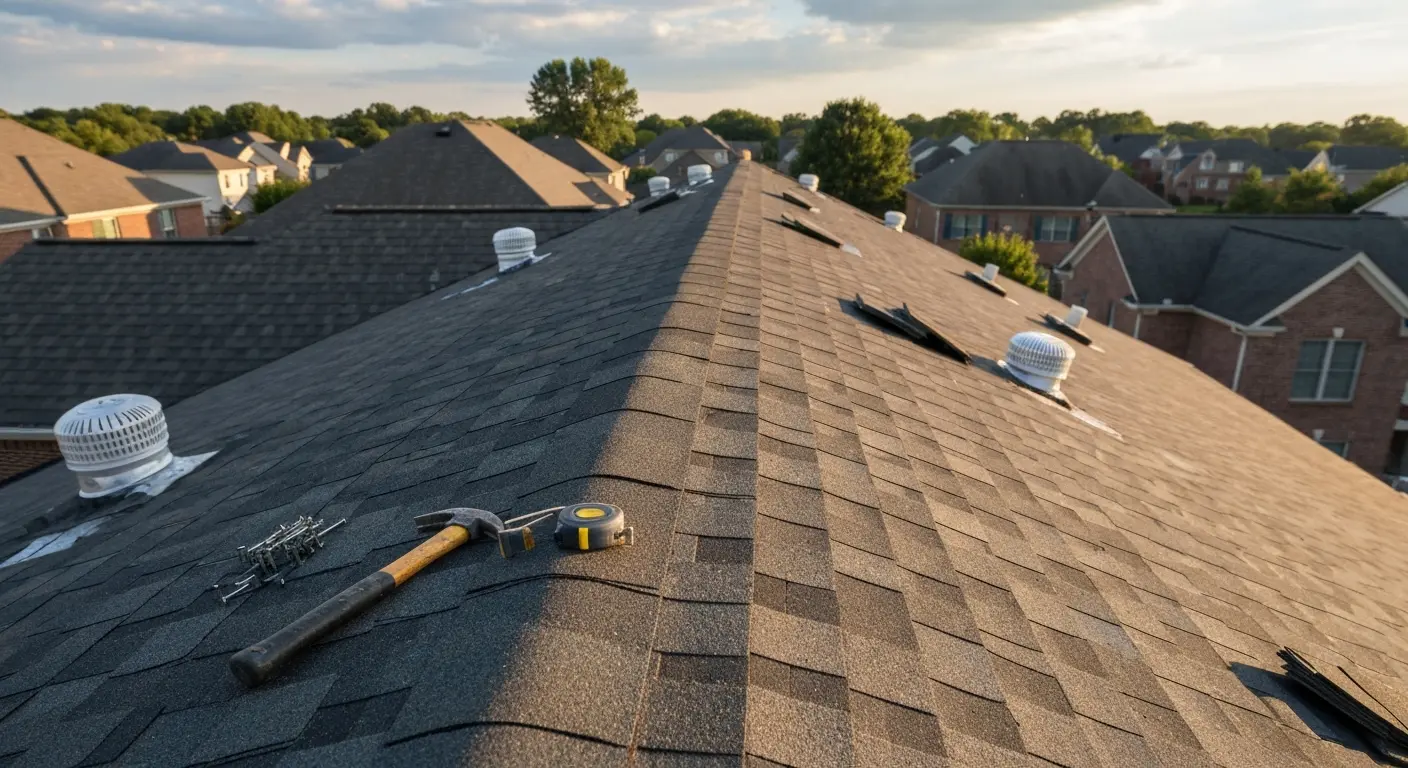
Full roof replacement in South Riding—asphalt shingles with proper ventilation.
Storm Damage Repair
Loudoun County averages 35–45 thunderstorm days yearly; July and August show the highest repair requests, at 40% and 45% respectively. Hail, wind gusts exceeding 60 mph, and falling branches require fast assessment and insurance coordination.
Professional inspections document hidden damage (missing shingles, dented valleys, flashing separation) before you file a claim. Most homeowners insurance covers storm damage when properly documented.
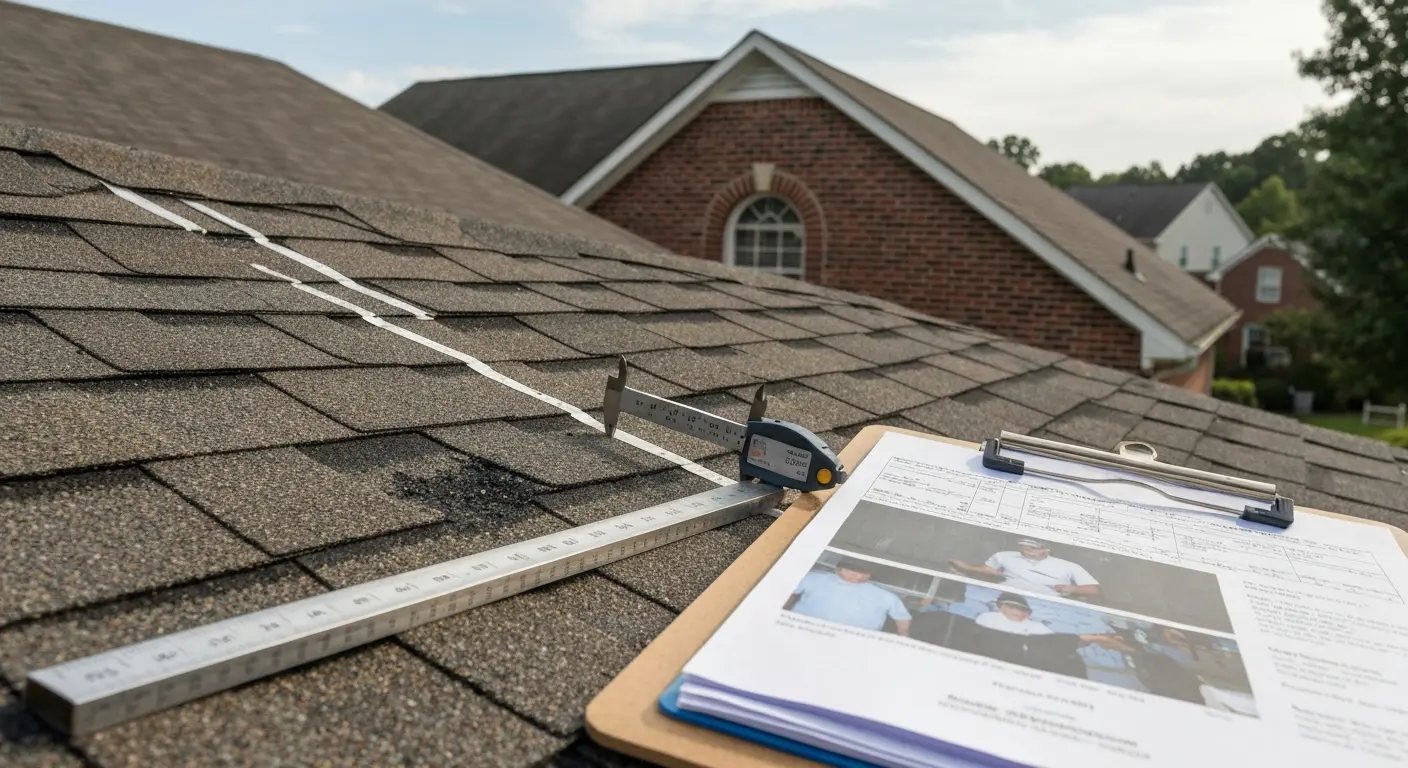
Hail damage assessment in Ashburn—documentation for insurance claim support.
Leak Repair & Maintenance
Water stains, ceiling damage, or soft spots on the roof often point to flashing failure, missing shingles, or ice dam buildup. Quick repairs prevent interior water damage and mold growth during Loudoun's wet spring season.
Periodic inspections after winters catch problems early and extend roof life by 5+ years in Sterling, Leesburg, and surrounding areas.
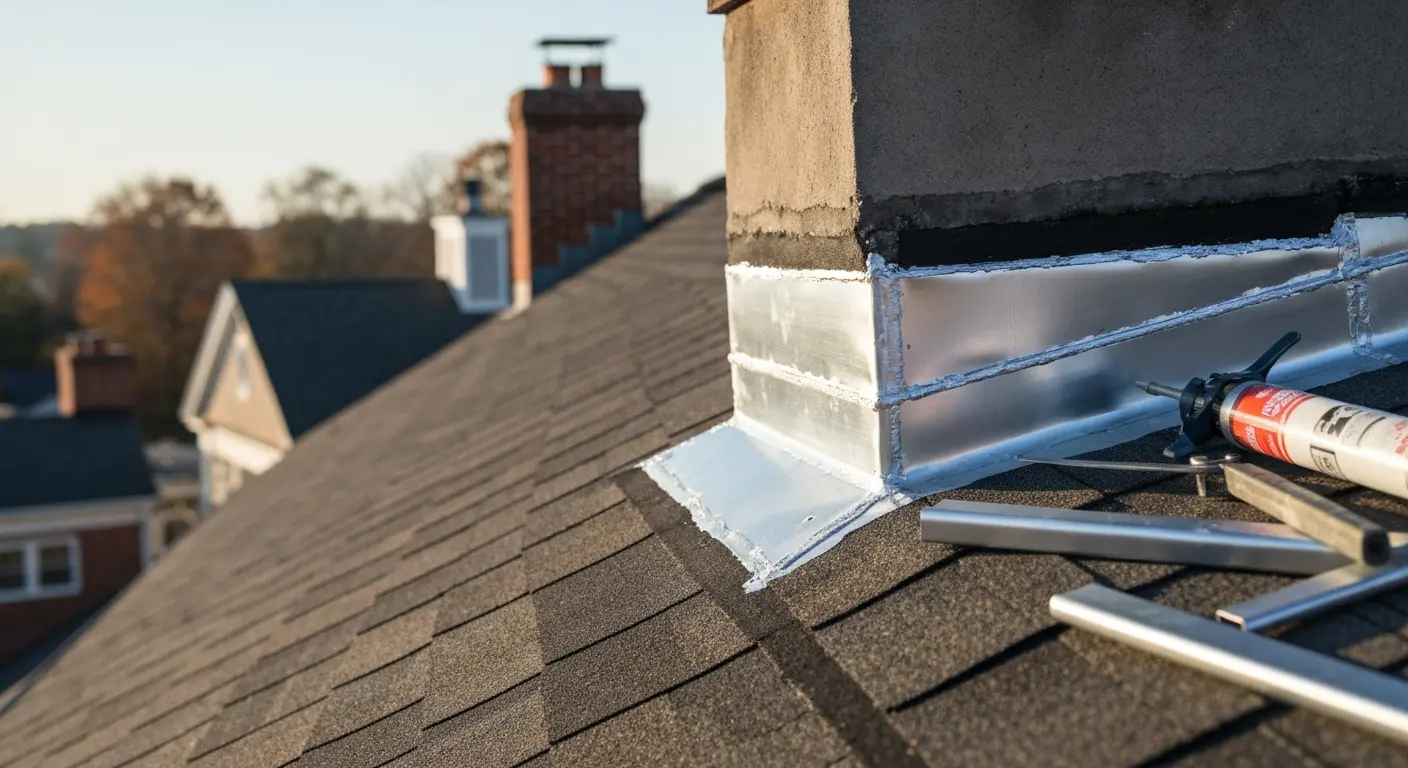
Chimney flashing repair in Leesburg—preventing water intrusion before ice season.
Specialty Roofing
Historic properties near Leesburg's downtown and barn conversions in Middleburg demand specialized materials. Metal standing seam, cedar shake, or slate roofs require contractors familiar with local Board of Architectural Review guidelines and Virginia Historic District rules.
Why It Matters
Loudoun County's roofing market attracts out-of-state storm chasers after major weather events. Storm chasers from out of state frequently lack proper Virginia licensing and disappear after collecting payment. Local contractors understand permitting, HOA approval timelines, and regional material suppliers.
Fact: Most Loudoun County homes are between 10 and 25 years old, meaning many are at or near first replacement age—peak risk for roofing issues.
Local Code & Permit Requirements
Virginia Uniform Statewide Building Code (VUSBC) sets fire rating, wind resistance, and ventilation standards. Loudoun County requires that roofing materials meet a minimum Class A fire rating for homes in developments where structures are spaced less than 10 feet apart. Townhomes in Brambleton and Broadlands typically fall under this rule.
Insurance & Storm Claims
Homeowners insurance covers hail and wind damage in most cases. Contractors with insurance expertise—holding minimum $1M general liability and workers' compensation—navigate adjuster visits and help maximize settlements.
HOA & Architectural Review
Many Loudoun developments have strict architectural review boards. South Riding, Broadlands, and Leesburg historic zones require approval before color or material changes. Established local contractors know which neighborhoods demand board sign-off.
Coverage Area & Getting Here
We serve all of Loudoun County, including Leesburg, Ashburn, Sterling, South Riding, Purcellville, Lovettsville, Round Hill, Aldie, and surrounding communities. Our local teams respond to emergency repairs and maintain ongoing relationships with property managers and homeowners throughout the county.
Leesburg & Historic Downtown
Colonial and Victorian homes require Board of Architectural Review approval. We handle historic preservation and period-appropriate materials.
Ashburn & Broadlands
Fast-growing suburban area with newer construction (1998–2010). Architectural review and strict HOA rules common here.
Sterling & South Riding
Mix of townhomes, colonials, and estates. Brambleton's newer neighborhoods require Class A fire-rated materials.
Purcellville & Wine Country
Rural properties, barns, and horse farms. Specialty metal roofing and agricultural building expertise.
Choosing a Roofing Contractor
What to Look For
- Licensed & insured in Virginia (Class A contractor); verify with state licensing board
- Minimum $1M general liability + workers' compensation; ask for proof
- 2–3 written estimates; compare scope, materials, and timeline clarity
- References from Loudoun County projects (not out-of-state storm chasers)
- Manufacturer certifications (CertainTeed, GAF, Owens Corning)
- Clear warranty on workmanship (typically 10 years minimum)
- Transparent pricing: no hidden fees or pressure to sign same-day
Red Flags
Avoid contractors who knock on your door after storms, pressure same-day decisions, offer to pay your insurance deductible, or lack local references. Loudoun County's active market attracts unlicensed operators who vanish once paid.
Frequently Asked Questions
Do I need a building permit for a roof replacement in Loudoun County?
The county requires a building permit for full roof replacements, and the permit application goes through the Loudoun County Department of Building and Development. Your contractor typically handles the application; permit fees range $125–$350 depending on scope.
Are hail and wind damage covered by homeowners insurance?
In most cases, yes. Homeowners' insurance typically covers hail and wind damage. Professional documentation and an experienced contractor's assessment help ensure fair settlement; file your claim promptly after any storm.
What roofing materials work best in Loudoun County's climate?
Asphalt shingles are affordable and reliable. For better durability against hail and wind, architectural shingles or standing seam metal offer higher impact resistance and longer lifespan in Loudoun's humid summers and cold winters.
What if my HOA requires architectural approval?
Many Loudoun developments require HOA board sign-off on roof color or material changes. A local contractor familiar with your community's rules can submit materials for approval before work begins, avoiding costly delays.
What should I do if my roof has hail or storm damage?
Document damage with photos, call a licensed contractor for a free inspection, file an insurance claim within 48 hours of the storm, and request contractor presence during the adjuster's visit. Professional assessment catches hidden damage ground-level inspection misses.
Are there warranties on roof work?
Yes. Full replacements typically come with 10-year workmanship warranty plus manufacturer guarantees on shingles or metal panels (typically 20–30 years). Ask for written warranty details before signing; compare across contractors.
DISCOVER WHAT OUR CUSTOMERS HAVE TO SAY ABOUT US
REVIEWS
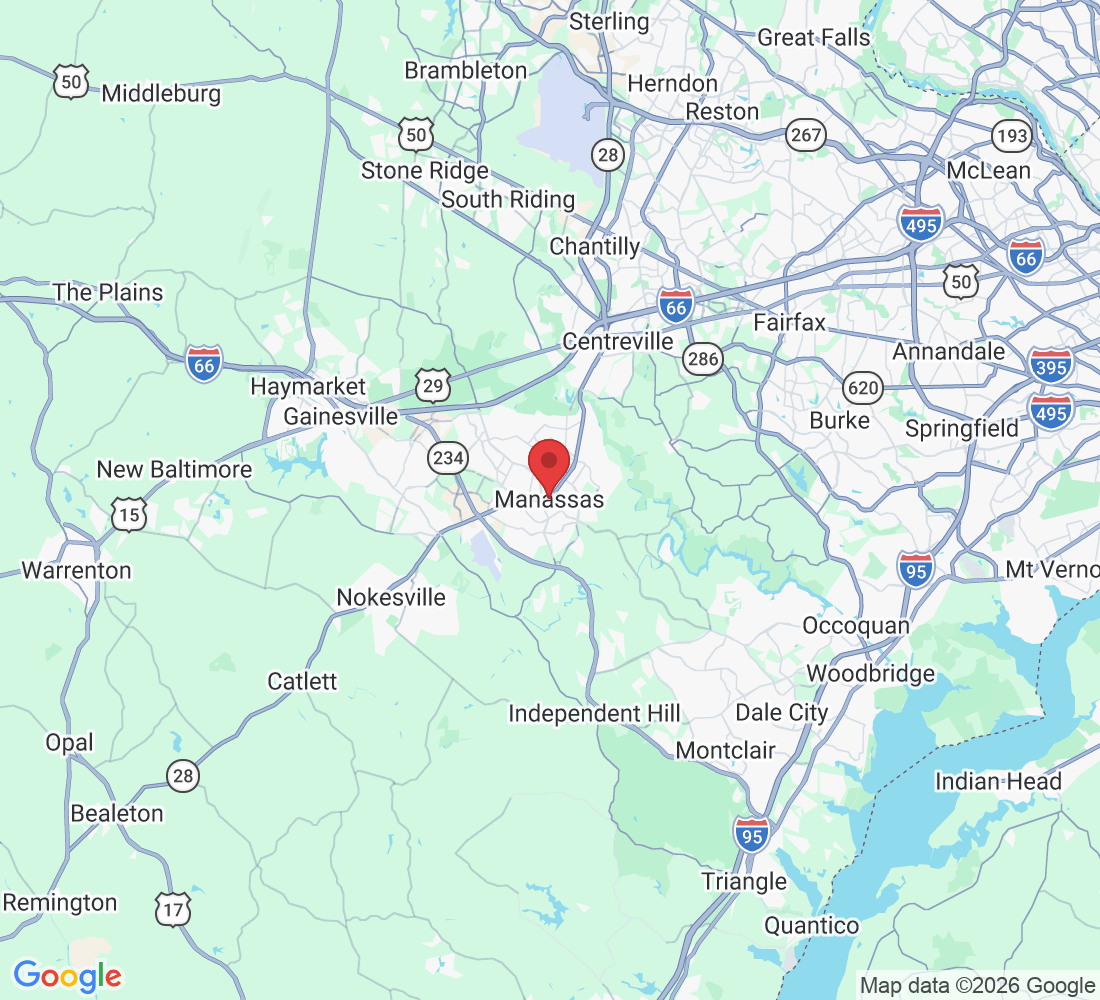
proudly serving these areas
Prince William County, VA
Fairfax County
Fauquier County
Culpeper County
Arlington County
Stafford County
Mclean
Great Falls
READY TO take the next step?
get a free quote TODAY!
QUICK LINKS
our services
service areas
operating HOURS
Mon: 9:00 am - 5:00 pm
Tue: 9:00 am - 5:00 pm
Wed: 9:00 am - 5:00 pm
Thu: 9:00 am - 5:00 pm
Fri: 9:00 am - 5:00 pm
Sat: 9:00 am - 5:00 pm
Sun: Closed - Closed
24/7 Emergency Service is available